Showing posts with label Ibsen's Women. Show all posts

Tuesday, May 12, 2009

Ibsen's Women - The Discussion

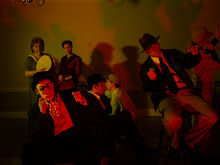
Red Tape Theatre's panel, Ibsen's Women, was presented on Sunday, May 10, alongside our
gender-swapped adaptation of Enemy of the People.

Prof. Jacob Juntunen (UIC Dept of Theatre), began with Nora from A Doll's House, who abandons her husband and children. The revolutionary aspect of this may be lost in a time of 50% divorce rates but Nora's action was unthinkable at the time and caused fierce debate among the audiences.

Mr. Robert Scogin (Artistic Director, Shaw Chicago) compared Ghosts to a Greek Tragedy, citing Mrs. Alving as a modern Clytemnestra who kills her husband with her moralizing only to be punished by her children. Mrs. Alving's resignation to stay with her husband despite their incompatibility has also branded her as "Nora grown up."

Prof. Julie Ward (Loyola Dept of Philosophy) commented that this made Hedda Gabler into "Nora on steroids." Unhappy with her timid husband, but unwilling to submit to her immoral admirers she sabotages their lives then ends the life of life of herself and her unborn child with her fathers pistol.

Mr. Scogin argued that in Ibsen's time evil springs from boredom as society leaves his women with nothing to do. Prof. Ward countered with the heavy responsibilities Nora takes by running the finances of her household. Mr. Scogin agreed, but added that society left Nora no legal way to do so, forcing her into forgery. Ibsen's plays critique aspects of a society that does not allow one to make a moral choice.

When asked if these women are still relevant, Prof. Juntunen answered that the plays present
women who actively reject their socially prescribed roles. The plays still has the power to make husbands and wives very afraid.

Enemy of the People runs May 4-30, 2009
Our next panel, Green Night of Theatre, will be Sunday, May 24.
Tickets are available through our website!

Paul G. Miller
Season Dramaturge

Sunday, May 10, 2009

Ibsen's Marriage

The Stockman’s marriage in Enemy of the People has its share of troubles but they are one of the healthiest couples in Henrik Ibsen’s canon. At today’s panel, Ibsen’s women, we will discuss the fraught relationships in A Dolls House, Ghosts and Hedda Gabler. Critics have enjoyed contrasting these plays to Ibsen’s own marriage.

Henrik Ibsen married Suzanna Thoreson in 1858, at age 30. His one time friend Martin Scheneekloth saw the marriage as a tragedy. In his letters about Ibsen he wrote:

“To find that one does not really love the woman one has married, that one’s requirements for a happy co-existence are so opposed to one’s wife’s that no reconciliation is possible, must be a desperate situation for a man, and that is Ibsen’s. He is a domineering character, egocentric and unbending, with a passionate masculinity and a curious admixture of personal cowardice, compulsively idealistic yet totally indifferent to expressing these ideals in his daily life… She is unwomanly, tactless, but a stable, hard character, a mixture of intelligence and stupidity, not deficient in feeling but lacking humility and feminine love. They can not find peace through love, so they wage war on each other, ruthlessly coldly, and yet she loves him, if only through their son, their poor son, whose fate is the saddest that could befall any child, to see divided what should be reconciled in him.

Whose is the fault if not the man? He took her from her father’s house, led her out into the strange world, and instead of devoting his life to finding some form of reconciliation he gives all his mind and passion to a demonic pursuit of literary fame. It is disturbing to hear him describe his plans to send his wife and child home so that he may work in peace abroad. He lacks the courage to pursue his career without abandoning his domestic responsibilities, to face up to the consequences of his ambition, to work incessantly to give her life fulfillment, to suffer and strive to educate his son. Thus he, who so loudly and brilliantly condemns the cravenness of our age, who in mighty poems proclaims the strength of human will, is himself a craven vacillating weakling. "

However their son Sigurd painted a very different picture. He saw his mother as Ibsen’s greatest champion who forced him to write in the many time she was tempted to give it all up. “The world can thank my mother that it has one bad painter the fewer and got a great writer instead.”

Henrik stayed with Suzannah till his death in 1906. While she encouraged the publishing of his work, she did her best to burn all his letters to her declaring their correspondence private. The letters that have survived are very affectionate. Ibsen referred to her by pet names such as his “cat” or “eagle.”

In 1914, a few days before her death, she spoke to an interviewer. “When we were young, many so-called friends came to Ibsen, but I sent them away… I had many unkind words for it, but I didn’t care. He had to have peace for his work… Ibsen had no steel in his character- but I gave it to him.”

Most likely glimpses of the truth remain in all his late plays of the joys and the sorrows, while the rest remains a mystery.

Our panel on Ibsen's Women is today, May 10, after the 2pm matinee.

Enemy of the People runs May 4-30, 2009.
Ticket are available through our website.

Paul G. Miller
Season Dramaturge

Thursday, May 7, 2009

Hedda's First Impressions

The protagonist of Henrik Ibsen's Hedda Gabler agrees to an unsuitable marriage, then destroys everyone in her path trying to get out. The premiere in 1891 was met with hostility by the critics who failed to understand Hedda's behaviour. Their sometimes hysterical responses mirrored a line in the play: "People don't do such things,"

Ibsen scholar Michael Meyer found insight in Gerhard Gran's review for Samtiden:

Gran: “It is a law, or anyway has until now been a law, that drama, in its present state of technical development, can only present comparatively simple characters… Everything that should make this curious being intelligible to us, her development, her secret thoughts, her half-sensed misgivings and all that vast region of the human mind which lies between the conscious and the unconscious – all this the dramatist can no more than indicate. For this reason, I think a novel about Hedda Gabler could be extremely interesting, while the play leaves us with a sense of emptiness and betrayal."
Meyer: "Gran’s remarks explain why people who accepted Emma Bovary, Anna Karenina and Dorothea Brooke wre baffled by [Ibsen's heroines] Ellida Wangel, Rebecca West and Hedda Gabler. Neither actors nor audiences, nor even those who bought the play in book form, were able to read between the lines of dialogue as we can today."

One of Ibsen's worst reviewed works went on to become his most produced among new generations of actors and audiences who wanted to "read between the lines."


I'll be hosting the panel on Ibsen's Women this Sunday, May 10 after the 2pm matinee.

Raven Theatre's Hedda Gabler runs May 3 - June 27, 2009

Red Tape Theatre's Enemy of the People runs May 4-30, 2009.


Paul G. Miller
Season Dramaturge