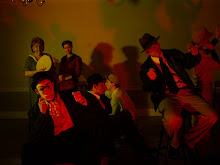
In Red Tape’s adaptation of The Dog in the Manger the Countess Diana’s chief suitor has been re-imagined as a member of the Spanish Inquisition whose influence in society is waning. The Inquisitors included laymen as well as clergy among their ranks so the scenario is not unthinkable. Though the Inquisition was still in power in Lope de Vega’s lifetime it grew unpopular when Spain’s economy began to sink.
In 15th Century Spain the Catholic Monarchs, Ferdinand and Isabel, sought to unite the regions of Portugal, Castille and Aragon, by declaring Christianity the dominant religion. Thousands of citizens “voluntarily” converted to keep their place in society. In 1478 the Monarchs established the Inquisition to investigate these conversos. By 1492 the Jews were officially expelled from all regions of Spain. The elimination of the Jewish middle class and the opening of American territories allowed the fortunes of the nobility to climb as Spain entered a Golden Age.
The Arts thrived in the economy of 16th Century Spain. Meanwhile the Inquisition proceeded to cut Spain off from all foreigners. Historian Henry Kamen writes that “Thereafter the closed society found that it had exhausted its own resources… The disappearance of the Jews and the persecution of the conversos created a void in the world of capital which was never satisfactorily filled by Spaniards. ” (The Spanish Inquisition, New American Library, 1965).
By the 19th Century the Golden Age had long since ended and the Inquisition had fallen out of favor. Spain’s military losses to France and England, and a failed attempt at a republic, had injured the economy. Spain’s parliament, the Cortes, saw the Inquisition as an obstacle to the countries reformation and began to cut off authority and finances. Personnel shrunk as inquisitors complained of unpaid wages. Their last official execution for heresy was recorded in 1825. Kamen writes “a formal decree was eventually issued on 15 July 1834 by which the Inquisition was definitively suppressed, all its properties and canonries applied to the extinction of public debt, and just payment of salaries made to all its formal officials.” By this point the Inquisition’s influence was so small that the decree was considered “little more than a formality.”
Paul G. Miller
Season Dramaturge
For more information on The Dog in the Manger click here: http://www.redtapetheatre.org/.
Wednesday, July 30, 2008

Thursday, July 24, 2008
Hearts, Wings and Exposition
We’re two weeks and four drafts into our workshop of The Dog in the Manger. The plays title is taken from a fable by Aesop. It is briefly explained in the play and in a previous blog. However another fable, or myth, is also referenced in the play: the story of Icarus. One actor in our workshop suggested we cut the retelling of the myth saying that our audience would already be familiar with it. Another responded that she’d not heard the myth till reading our script. (I myself have known the story for some time, but was introduced to it in 1986 by the Nintendo game Kid Icarus which took… liberties.)
This discussion led to the larger issue of exposition. The conventions of de Vega’s time allowed for a great deal. Our adaptation has attempted to streamline this, looking for opportunities to show rather than tell. James, our playwright, has begun to explore a visual language for the piece including a giant heart, a crucifix and other moving set pieces that become associated with particular characters. As the workshop progresses the visual elements have taken on a larger role as the dialogue continues to pare down. How we’ll realize these in performance is yet to be determined though Red Tape has had some positive experiences with video projections.
James quote of the week: “I never thought I’d find an excuse to write the stage direction 'the heart breaks.'”
Paul G. Miller
Season Dramaturge
For more information on The Dog in the Manger please visit http://www.redtapetheatre.org/.
This discussion led to the larger issue of exposition. The conventions of de Vega’s time allowed for a great deal. Our adaptation has attempted to streamline this, looking for opportunities to show rather than tell. James, our playwright, has begun to explore a visual language for the piece including a giant heart, a crucifix and other moving set pieces that become associated with particular characters. As the workshop progresses the visual elements have taken on a larger role as the dialogue continues to pare down. How we’ll realize these in performance is yet to be determined though Red Tape has had some positive experiences with video projections.
James quote of the week: “I never thought I’d find an excuse to write the stage direction 'the heart breaks.'”
Paul G. Miller
Season Dramaturge
For more information on The Dog in the Manger please visit http://www.redtapetheatre.org/.
Wednesday, July 16, 2008
Workshop Report: The First Readthrough
And we're off! On Saturday we heard a group of actors read through our adaptation of The Dog in the Manger. These folks have generously agreed to join us over three weekends, some switching between multiple roles, as we workshop and tweak the fledgling script. It ran 90 minutes, a manageable length, and told a story in the process. The foundation is there.
Now it's time to build up. The discovery that a key character has only "half an arc," and that a second character disappeared midway through, segued into a discussion of the plays ending. Lope de Vega's play ends abruptly and our draft follows suit. While a certain level of ambiguity can be useful, some decisions will need to be made. Will our leads romance end on a note of hope or cynicism? Will their exes be left to rage like Shakespeare's Malvolio, or will their rage be soothed? And what of the Spanish inquisition? How much danger is everyone in now that our Ricardo is an inquisitor? The consensus around the table was that, while no one wanted a strictly "happy ending," we would like to see what happens when we tie up some loose ends.
Now we'll begin table work, focusing on Teodoro's relationships with his loves and his servant. By the time we reach our second read-through we'll have a different set of scenes and a different combination of actors to read them. The possibilities are exhilarating.
Paul G. Miller
Season Dramaturge
Auditions will be held July 23 and 24, 2008. For more information on auditions and performances of The Dog in the Manger please visit http://www.redtapetheatre.org/.
Now it's time to build up. The discovery that a key character has only "half an arc," and that a second character disappeared midway through, segued into a discussion of the plays ending. Lope de Vega's play ends abruptly and our draft follows suit. While a certain level of ambiguity can be useful, some decisions will need to be made. Will our leads romance end on a note of hope or cynicism? Will their exes be left to rage like Shakespeare's Malvolio, or will their rage be soothed? And what of the Spanish inquisition? How much danger is everyone in now that our Ricardo is an inquisitor? The consensus around the table was that, while no one wanted a strictly "happy ending," we would like to see what happens when we tie up some loose ends.
Now we'll begin table work, focusing on Teodoro's relationships with his loves and his servant. By the time we reach our second read-through we'll have a different set of scenes and a different combination of actors to read them. The possibilities are exhilarating.
Paul G. Miller
Season Dramaturge
Auditions will be held July 23 and 24, 2008. For more information on auditions and performances of The Dog in the Manger please visit http://www.redtapetheatre.org/.
Friday, June 27, 2008
The Fate of Our Heroine
The title character of The Dog in the Manger is the Countess Diana. Like the dog in Aesop’s fable she’ll not allow others to enjoy what she cannot. In the dog’s case it was food. In Diana’s it is the love of her servant, Teodoro. Her rank gives her power over him, which she enjoys, but this power would vanish if she wed him.
Diana’s decision to wed could reduce her to the status of property. It’s a serious dilemma when one considers that the heroines in Lope de Vega’s plays were often abandoned, raped or killed by their men. Lope highlighted marriage's contradictions in the play Justice without Revenge. When the heroine learns of her husband's affairs she has one of her own. He responds by slaughtering her to restore his "honor." Though frowned upon, a husband in 17th Century Spain was within his rights to murder a wife suspected of adultery, while women had no such legal recourse.
Diana is not slaughtered but she fits other patterns. A recurring figure in de Vega’s comedies was the mujer esquiva; a woman averse to marriage. Her plight is well explored in Women and Society in the Spanish Drama of the Golden Age by Melveena McKendrick (1974). Rather than explore the rational arguments for her singledom, de Vega would make it the result of vanity or pride that must be overcome by the hero. Still he allowed his women to battle against social convention before restoring the status quo. McKendrick concludes “By the standards of their day the Spanish dramatists of the Golden Age were enlightened and sympathetic men in their attitude to women. One cannot ask for more.” How much more should Diana ask of us in 2008? How could she win Teodoro and keep her self respect? de Vega himself provides an answer that we look forward to revealing this fall!
Paul G. Miller
Season Dramaturge
For more information on our production of The Dog in the Manger please visit http://www.redtapetheatre.org/.
Diana’s decision to wed could reduce her to the status of property. It’s a serious dilemma when one considers that the heroines in Lope de Vega’s plays were often abandoned, raped or killed by their men. Lope highlighted marriage's contradictions in the play Justice without Revenge. When the heroine learns of her husband's affairs she has one of her own. He responds by slaughtering her to restore his "honor." Though frowned upon, a husband in 17th Century Spain was within his rights to murder a wife suspected of adultery, while women had no such legal recourse.
Diana is not slaughtered but she fits other patterns. A recurring figure in de Vega’s comedies was the mujer esquiva; a woman averse to marriage. Her plight is well explored in Women and Society in the Spanish Drama of the Golden Age by Melveena McKendrick (1974). Rather than explore the rational arguments for her singledom, de Vega would make it the result of vanity or pride that must be overcome by the hero. Still he allowed his women to battle against social convention before restoring the status quo. McKendrick concludes “By the standards of their day the Spanish dramatists of the Golden Age were enlightened and sympathetic men in their attitude to women. One cannot ask for more.” How much more should Diana ask of us in 2008? How could she win Teodoro and keep her self respect? de Vega himself provides an answer that we look forward to revealing this fall!
Paul G. Miller
Season Dramaturge
For more information on our production of The Dog in the Manger please visit http://www.redtapetheatre.org/.
Friday, June 20, 2008
Nobody Expects the Spanish Inquisition!
The chief villain in The Dog in the Manger is probably social prejudice. The secondary villains are a pair of bumbling counts who court Diana and plot against Teodoro. Artistic Director James Palmer has given me an interesting assignment. I’m to research the feasibility of making the counts members of the Spanish Inquisition.
I was intrigued. Lope de Vega frequently introduced local politics into his tragedies and honor plays. Queen Isabella and King Ferdinand appeared themselves as a deux ex machine to rescue the wronged peasants in Fuente Ovejuna and Peribanez. However as I read about the gruesome instruments of torture and the ugly politics behind the movement I wondered if the Inquisition would be too much for the comedy to bear. It seemed that if the Inquisition accused Teodoro of heresy he wouldn’t survive till Act III. It didn’t take long to convince me the Inquisition could be funny. Mel Brooks had them perform a musical number and Monty Python simply made them ninnies. I was further encouraged to read that the people of Naples, where Dog in a Manger is set, did not take the inquisition seriously.
According to The Spanish Inquisition: A Historical Revision by Henry Kamen (1998) the “Italians felt that Spanish hypocrisy in religion, together with the existence of the Inquisition, proved that the tribunal was created not for religious purity, but simply to rob the Jews…. Moreover, the racialism of the Spanish authorities was scorned in Italy, where the Jewish community led a comparatively tranquil existence. As the Spanish ambassador at Rome reported in 1652: ‘In Spain it is held in great horror to be descended from a heretic or a Jew, but here they laugh at these matters, and at us, because we concern ourselves with them.’” (p.309).
This opens up some possibilities! Teodoro’s parentage is already at question in the play and if his rivals were members of the Inquisition they could certainly try to spread scandal against him without necessarily leading to execution by the Italian authorities. I’ll be interested to see where this path could lead us.
Paul G. Miller
Season Dramaturge
For more information on our production of The Dog in the Manger please visit http://www.redtapetheatre.org/.
I was intrigued. Lope de Vega frequently introduced local politics into his tragedies and honor plays. Queen Isabella and King Ferdinand appeared themselves as a deux ex machine to rescue the wronged peasants in Fuente Ovejuna and Peribanez. However as I read about the gruesome instruments of torture and the ugly politics behind the movement I wondered if the Inquisition would be too much for the comedy to bear. It seemed that if the Inquisition accused Teodoro of heresy he wouldn’t survive till Act III. It didn’t take long to convince me the Inquisition could be funny. Mel Brooks had them perform a musical number and Monty Python simply made them ninnies. I was further encouraged to read that the people of Naples, where Dog in a Manger is set, did not take the inquisition seriously.
According to The Spanish Inquisition: A Historical Revision by Henry Kamen (1998) the “Italians felt that Spanish hypocrisy in religion, together with the existence of the Inquisition, proved that the tribunal was created not for religious purity, but simply to rob the Jews…. Moreover, the racialism of the Spanish authorities was scorned in Italy, where the Jewish community led a comparatively tranquil existence. As the Spanish ambassador at Rome reported in 1652: ‘In Spain it is held in great horror to be descended from a heretic or a Jew, but here they laugh at these matters, and at us, because we concern ourselves with them.’” (p.309).
This opens up some possibilities! Teodoro’s parentage is already at question in the play and if his rivals were members of the Inquisition they could certainly try to spread scandal against him without necessarily leading to execution by the Italian authorities. I’ll be interested to see where this path could lead us.
Paul G. Miller
Season Dramaturge
For more information on our production of The Dog in the Manger please visit http://www.redtapetheatre.org/.
Monday, June 16, 2008
Welcome to the 2008-2009 Season
In 2007-2008 we began a dialogue with our audiences through a series of post-show discussions, guest panels and Semantic Labs. The positive response has encouraged us to expand the conversation online. I’m pleased now to welcome you to the Red Tape Theatre Company blog!
After reading hundreds of plays, narrowing down to a list of 15, then tossing the list out and starting from scratch, we are pleased to announce our 2008-2009 season. Red Tape Theatre Company will be producing Lope de Vega’s The Dog in the Manger in October 2008 and Henrik Ibsen’s An Enemy of the People in May 2009.
Red Tape has long been interested in writing our own work and will be taking our first step this season by creating original adaptations of both plays. At present I’m happily buried in books about the Spanish Golden Age and the rise of the Inquisition. We must gain a greater understanding of de Vega’s time to find the play’s connections to our own. Members of the company, and some special guests, will be asked to write on our blog as the adaptation process continues. We look forward to sharing our findings with you!
Paul G. Miller
Season Dramaturge
For more information on our season visit http://www.redtapetheatre.org/
After reading hundreds of plays, narrowing down to a list of 15, then tossing the list out and starting from scratch, we are pleased to announce our 2008-2009 season. Red Tape Theatre Company will be producing Lope de Vega’s The Dog in the Manger in October 2008 and Henrik Ibsen’s An Enemy of the People in May 2009.
Red Tape has long been interested in writing our own work and will be taking our first step this season by creating original adaptations of both plays. At present I’m happily buried in books about the Spanish Golden Age and the rise of the Inquisition. We must gain a greater understanding of de Vega’s time to find the play’s connections to our own. Members of the company, and some special guests, will be asked to write on our blog as the adaptation process continues. We look forward to sharing our findings with you!
Paul G. Miller
Season Dramaturge
For more information on our season visit http://www.redtapetheatre.org/
Subscribe to:
Posts (Atom)